How lending works on BoRo
You list something you already own, meet the person borrowing it, and get paid when it comes back. This is every step of that, what protects the item while it is out, and what you actually receive.
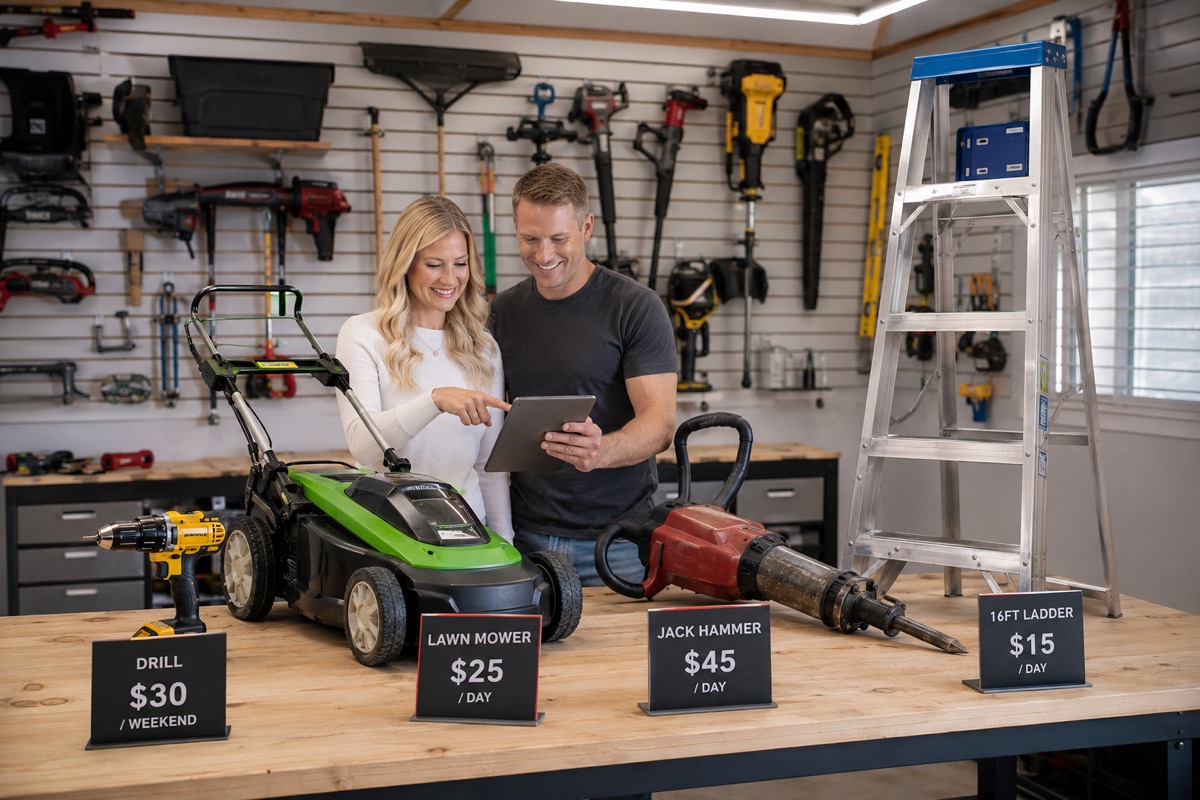
List it. Lend it. Earn it.
Five steps, start to finish, from listing the item to the money landing.
- 1
Verify, then set up payouts
You verify the same way a borrower does: a government photo ID, a live selfie matched against it, and a card on file. Lending adds one step, which is setting up payouts with Stripe before you accept your first booking. That is where your earnings land.
- 2
List the item
Photos, a daily price, the rules you want, the dates it is free, and the value you declare for the item. That declared value does more work than anything else on the listing: it decides which protection applies, how large it is, and the most you can ever recover. Nothing can be listed above $1,000 during the pilot.
- 3
Approve the rental
A request arrives, you look at the dates and the person, and you accept. About a day before the meetup you both tap to confirm attendance, which places a Commitment Hold on both sides. A lender posts the same amount a borrower does, because a no-show should cost both people the same.
- 4
Hand it over
At the meeting point both holds release as soon as both phones are inside the 100-foot zone. You photograph the item and the borrower sees those photos on their screen. They authorize payment, the rental fee and the Shield are held on their card, and then the scan starts their 45 minutes.
- 5
Get paid
Your price minus 3%. On a $54 rental you receive $52.38. Earnings land in your BoRo Wallet, which is money held with Stripe rather than with BoRo, and you cash out to your own bank or debit card on the standard Stripe timeline. Stripe sells a faster payout, and BoRo receives none of that fee.
Your 45 minutes at the return
Two different checks, and the order matters.
While the borrower is still standing there, look the item over. Anything about how it looks has to be raised then, in person, so they can see the same mark and answer for it. Once they have gone, the app will not let you file it.
Then you have 45 minutes from the return scan to test that it still works, and a fault can be reported from anywhere. The clock starts at the scan and never pauses.
If something comes back damaged
Damage pays out in tiers, calculated on the value you declared.
Every dollar goes to your Wallet. The card processing cost is added to what the borrower pays, so you receive the full figure, and BoRo takes no cut of a Shield capture. On items over $100 the percentage comes off the Shield that was held. At $100 or less it is calculated on the declared value and charged to the borrower's saved card.
- Minor25%
- It still works and still does the job. On a $120 declared value that is $30.
- Moderate50%
- It still runs but it is impaired, or it needs a real repair. On $120 that is $60.
- Total loss or theft100%
- It does not work, is not safe, or never came back. On $120 that is $120.
What you earn, and what is taken
BoRo earns 10% across a transaction: 3% out of what the lender receives and 7% on top of what the borrower pays. That is the whole platform fee.
Card processing sits on the borrower's side, so you receive the price you set less the 3%. Recovery, storage and a faster payout are charged separately and only if you use them, and you see the amount first.
If a borrower cancels late, their Commitment Hold comes to you on the same ladder: half between 12 and 24 hours, all of it under 12 hours or on a no-show. You receive the full amount.
Two things to know before you list
Your home insurance probably does not cover this. Most homeowners and renters policies exclude business pursuits, and renting your property for money likely counts as one. Call your carrier before you list. BoRo Shield is not insurance and gives you no liability coverage.
A deal taken off the platform has no Shield. You also lose the Commitment Hold, the photo record, and any help from BoRo. Whatever happens then is between you and the other person.
What stands behind the item
On items declared over $100, the borrower's card is held for the full declared value the whole time the item is out. Nothing is charged. If the item comes back fine the hold disappears, and if it does not, that hold is what makes the lender whole. At $100 or less no hold is placed and the saved card is verified instead, which the Terms call materially lesser protection.
BoRo Shield is not insurance. It is a contractual, deposit-based protection built into the platform, and it does not replace your own property or liability insurance.
See how BoRo Shield worksQuestions people ask
- When do I actually get the money?
- Once the return settles, your earnings go to your Stripe balance and out to your bank on the standard Stripe timeline.
- What is the most I can recover?
- The value you declared, and no more than $1,000 during the pilot. Understate what your item is worth and you have capped your own recovery.
- What happens if I cancel?
- The same ladder applies to you. Lenders who make a habit of cancelling lose listing visibility, and then the account.
- Do I have to let someone test the item off-site?
- No. It is a setting on each listing. Leave it off and the item cannot leave the meeting point during the inspection.
Ready when we open
BoRo launches in the greater Charlotte area. Join the waitlist and we will tell you the day your ZIP opens.